Omar Shaikh, Valentin Teutschbein*, Kanishk Gandhi*, Yikun Chi, Nick Haber, Thomas Robinson, Nilam Ram, Byron Reeves, Sherry Yang, Michael S. Bernstein, Diyi Yang.
ArXiv 2026
Project Page View Paper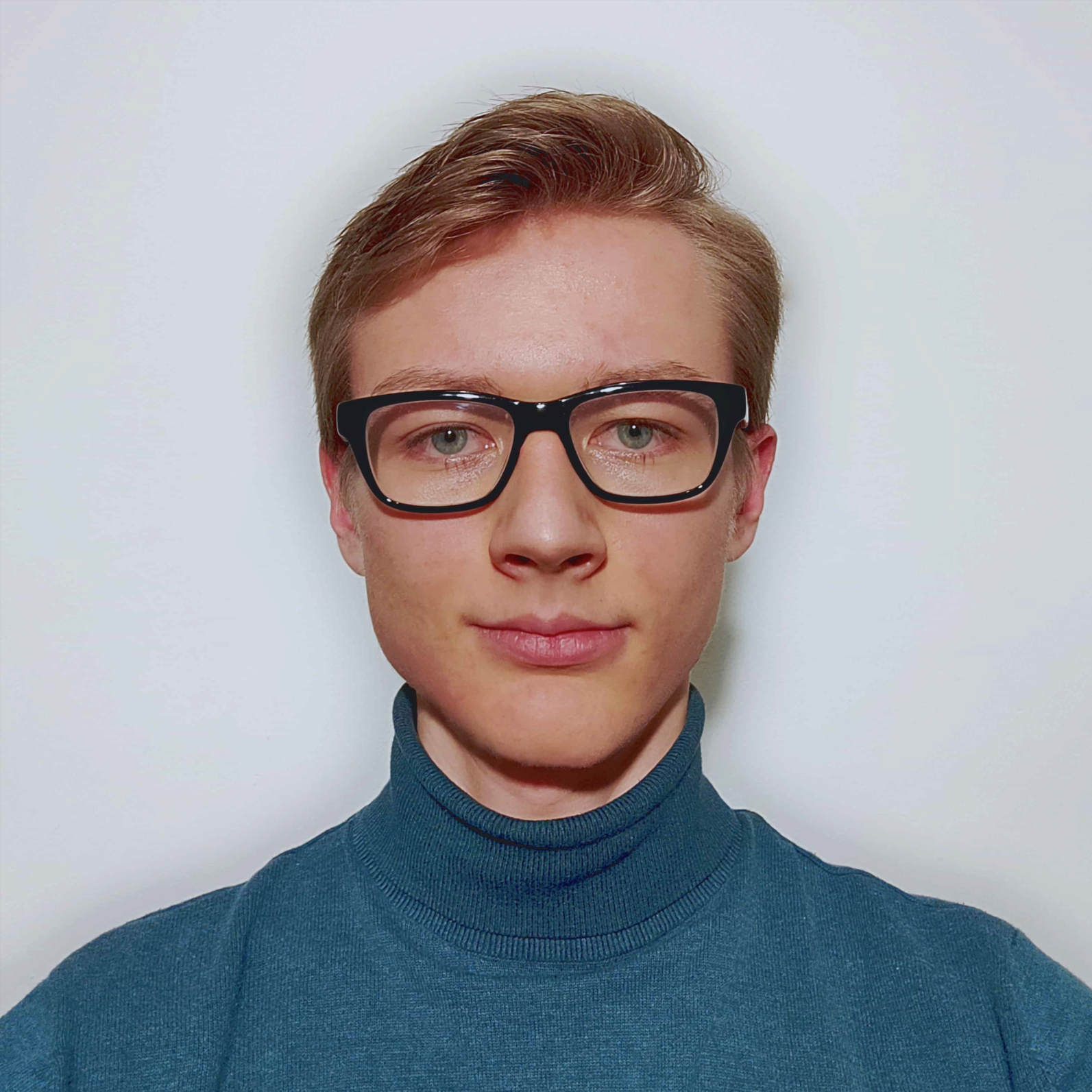
Hi, I'm Valentin! I study Computer Science in Germany and am working understanding and improvimg computer usage experience using User Modeling and Artificial Intelligence.
I am currently pursuing a Bachelor of Science degree at Hasso-Plattner-Institute. Through self-learning, school education, my work at a tech startup and internships at the Max-Planck-Institute for Plasma Physics, I have acquired expertise in nine programming languages and completed projects in Artificial Intelligence, Data Science, web development and electrical engineering.
My passion for computer science grew from my interest in model-building and handling digital decoders, which led me to explore both hardware and software. My long-term goal is to develop an AI that mimics the functioning of the human brain. I have a strong motivation for research and science which aligns perfectly with my goals.
With my prior achievements in AI and programming, coupled with my experiences at the Max-Planck-Institute, I am excited to further improve my skills and pursue a successful career in the integration of Computer Science and Natural Sciences.
During my studies research positions and my free time I have created various research projects and tutorials to share my knowledge and help others to solve the same problems and to better understand topics of computer science.
Omar Shaikh, Valentin Teutschbein*, Kanishk Gandhi*, Yikun Chi, Nick Haber, Thomas Robinson, Nilam Ram, Byron Reeves, Sherry Yang, Michael S. Bernstein, Diyi Yang.
ArXiv 2026
Project Page View PaperMatthew Jörke, Defne Genç*, Valentin Teutschbein*, Shardul Sapkota, Sarah Chung, Paul Schmiedmayer, Maria Ines Campero, Abby C. King, Emma Brunskill, James A. Landay.
CHI '26 (Best Paper Award, top 1%)
Project Page View PaperDuring my research project at HPI, we managed to improve 3D point cloud extraction by 56% on human rating scale through neural image enhancement.
View PaperIn this tutorial I explain step by step how simple Neural Networks work and how you can program a Neural Network yourself.
View TutorialThe project is about reusing knowledge, encoded in existing LoRA-adapter for energy efficient model fine-tuning. It is advised by Prof. Ralf Herbrich (HPI) and Giovanni Zapella (Amazon Research)
Skills: Python, Machine Learning, NLP, Statistics
The research project Bloom is about building a personal coach by augmenting ChatGPT with access to Apple HealthKit data. I designed an iOS chat interface and integrated speech-to-text and OpenAI real-time streaming API to it. The project is supervised by the PhD student Matthew Jörke, advised by Prof. James Landay (HCI Lab), Prof. Emma Brunskill (AI Lab)
Skills: React Native, Python, Swift, Firebase, FastAPI
Gathering market insights and creating data analysis prototypes for business partners using Machine Learning technology.
Skills: Python, Machine Learning, Big Data, Statistics, Databases, PostgreSQL, QGis
I am pursuing a Bachelor of Science in the IT Systems-Engineering program at HPI. My studies include common Computer Science topics and research in Machine Learning.
Skills: C, C++, Python, Unity (C#), RISC-V assembly, PostgreSQL
Investigation of reasons for overestimated density scaling of energy confinement time in nuclear fusion reactors.
Skills: Python, Scientific Research, Scientific communication
This project provides a simple implementation of a feedforward neural network using Python with Numpy. The network can solve multiple problems including classification and prediction problems.
Technologies: Python, Numpy
GithubThe software was written in python and trains an agent (blue) using the implemented q-learning algorithm over 40,000 epochs. during this process, the agent is penalized if it reaches the same position as the enemy (red) and rewarded if it captures the food (green). the orange rectangles represent obstacles that cannot be overcome by any moving rectangle. additionally, the agent receives a small penalty for each unsuccessful step.
Technologies: Python, Pygame
GithubThis project is the outcome of a Human-Computer-Interaction course at HPI. It involves driver, communication-layer, and game development. The project features the DualPanto, a haptic device enabling input and output of haptic signals. This innovation facilitates real-time interaction for blind individuals with 2D spatial content on computers. Our group specifically implemented Tetris to cater to blind users, enabling them to enjoy the game.
Technologies: Arduino, Unity3D
GithubSelf-developed 2D game in Python using Pygame. The player has the goal to collect the coin and shoot the green circles.
Technologies: Python, Pygame
I developed this program in Python during my four-week internship at the Max Planck Institute for Plasma Physics in the Stellarator Heating and Optimization Department. Interval-wise, it compares the density dependence of the energy confinement time sorted by the different stellarator experiments.
Technologies: Python, SciPy, Pandas, NumPy, Matplotlib
3D game developed in-house with the Unity engine. The player controls a ball with the goal of overcoming the obstacles without harm by jumping over them or dodging them to the left or right. All obstacles in the color of the player's ball can be passed without danger. On color changing fields, the ball takes on the respective color of the field.
Technologies: Unity3D
To visualize what a sustainable future for the energy cooperative Wir-in-Neuenkirchen, which I co-founded, could look like.
Technologies: Blender